





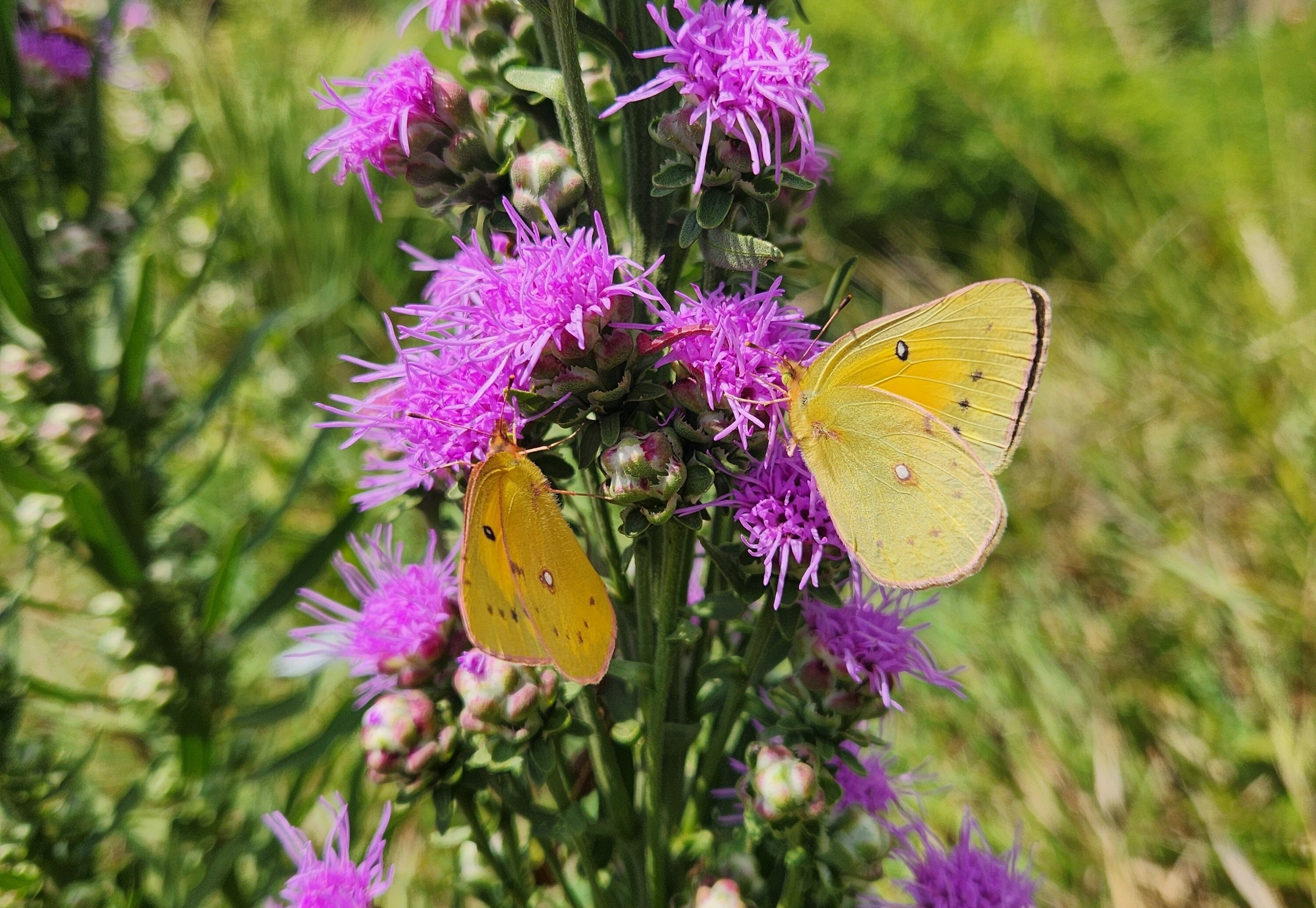
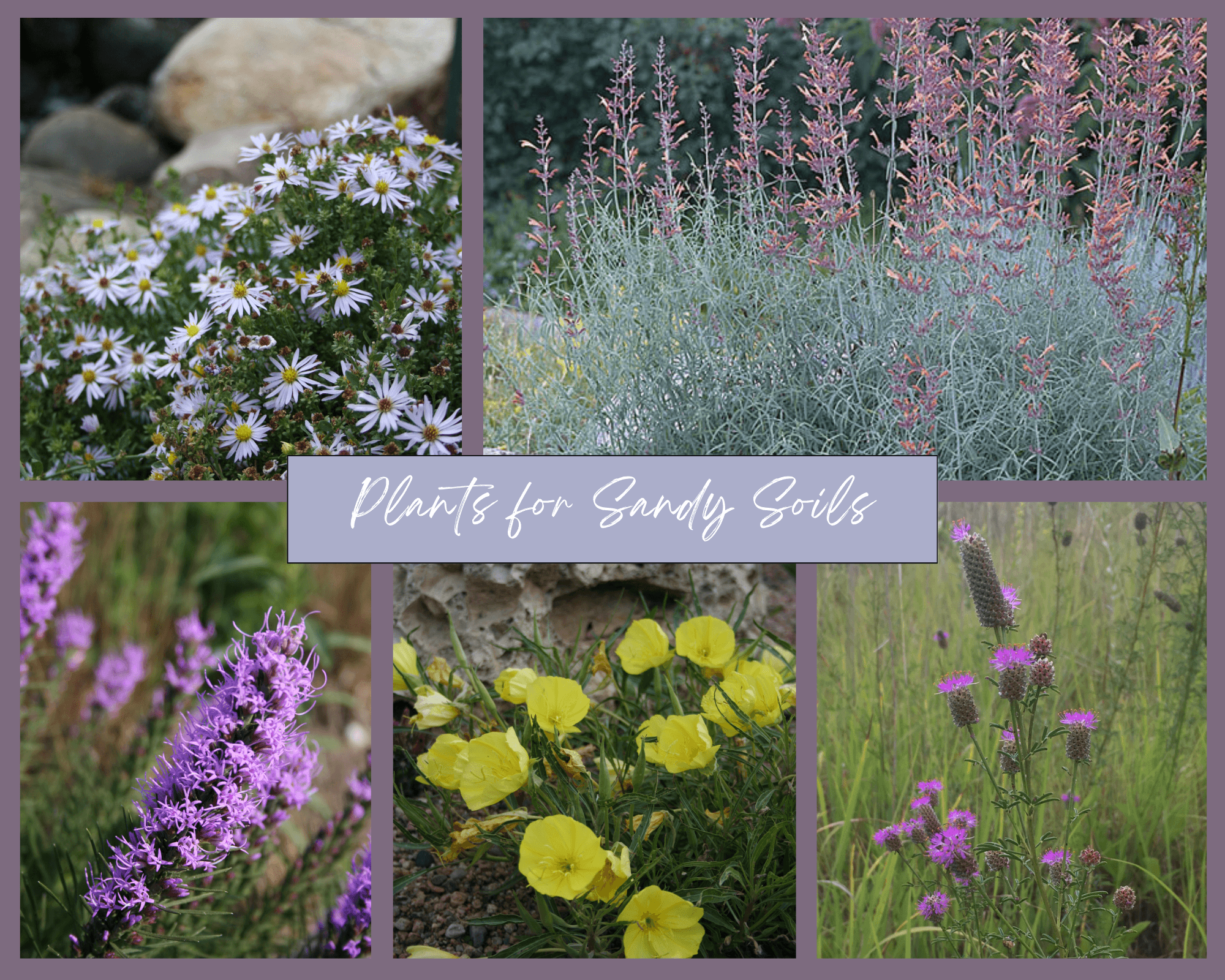
Photos clock from top left: Fendler's aster ((Symphyotrichum fendleri), Hummingbird mint (Agastache ruptestris), purple prairie clover (Dalea purpurea), Missouri evening primrose (Oenothera macrocarpa) and dotted blazing star (Liatris punctata).
Sand is widespread in Nebraska and can be found in soil along the Platte River to the Sandhills and in lots of spots in between. You might assume you can't grow much in sand but think again! Every time you read "must have well-drained soil" in a nursery catalog, that means sand is your friend!
Here are five Nebraska natives that thrive in sandy, gritty or rocky soils:
- Dotted blazing star (Liatris punctata) features tall (up to 3 feet high) spikes of purple tufted flowers that encompass much of the plant's stems. Its very long taproot makes it the most drought-tolerant of all the liatris. The leaves are numerous, narrow and speckled, which gives the plant its common name, dotted blazing star. In addition to well-drained soil, Liatris punctata requires full sun and needs very little watering, which makes it an ideal addition to a xeric garden. Its purple flowers, which bloom mid-summer through September, attract many pollinators, including native bees and monarch butterflies.
- Fendler's aster (Symphyotrichum fendleri), a less-common aster that's native to Nebraska, tends to do well in sandy, gritty or rocky soils and, in its natural habitat, can be found in limestone or sandstone outcroppings, in mixed grass prairies and pastures and along roadsides. It blooms in late summer and fall, offering purple or light lavender ray florets with bright yellow centers that turn reddish-brown as the season progresses. Because it grows to a maximum height of just 1 foot tall and tends to be low-sprawling and shrubby, Fendler's aster makes a good addition to a rock garden or as a front-of-the-bed border flower. It has thick, woody stems with narrow, stiff leaves.
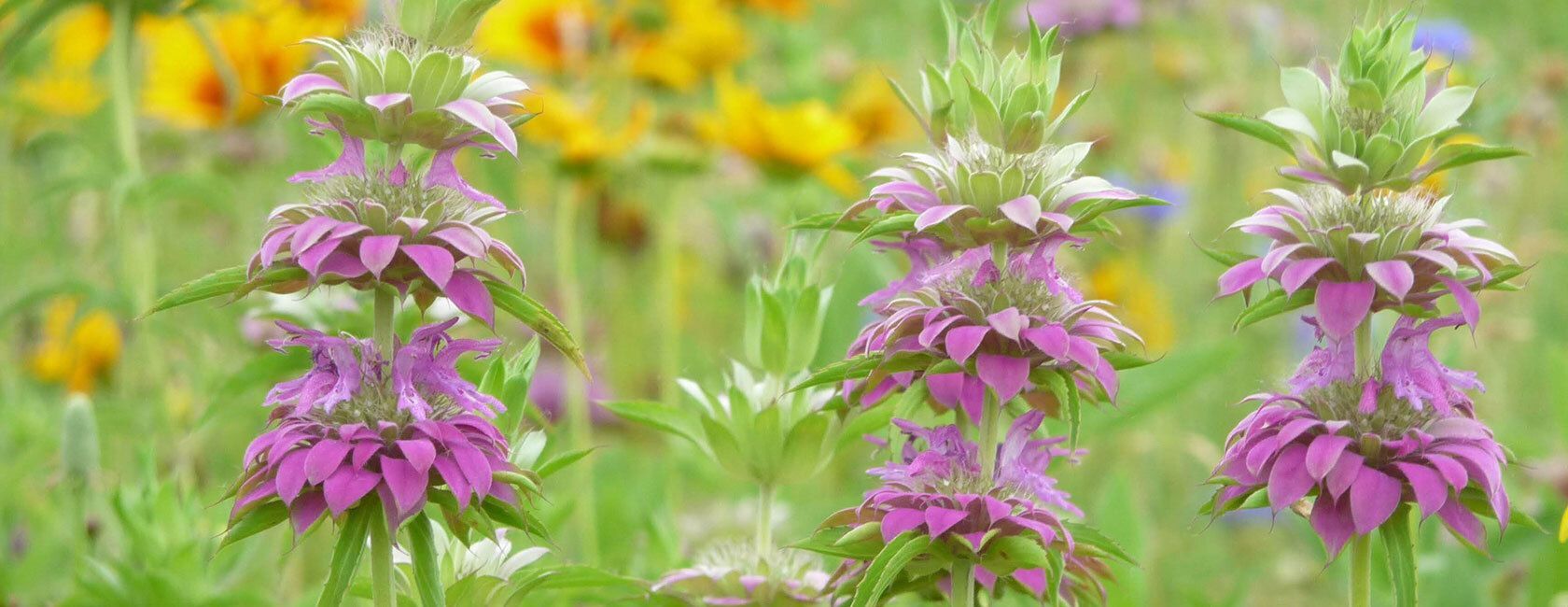
- Hummingbird mint, also called licorice mint (Agastache rupestris), is a hot season perennial offering a stunning melding of tangerine and lavender blossoms with light green foliage. It requires well-drained soils (it will perform poorly in hard clay soils that retain moisture) and is tolerant of dry soils and drought once established. This mint is not terribly spready, instead forming 2-3' tall upright clumps (it also does well in containers, especially if you pinch back foliage tips in the spring to limit mature plant height). Deadheading spent blossoms will promote additional blooms. This plant is also very attractive to a variety of pollinators and will entice butterflies, bees and other insects to visit from mid-summer into the fall.
- Missouri evening primrose (Oenothera macrocarpa) can tolerate drought and poor soils, including rocky, limey and clay. Native to southeast Nebraska, Missouri evening primrose can be sprawling or upright, with large, yellow, 4-petaled flowers. The plant gets its common name from the fact that it's native to the limestone glades, bluffs and rocky prairies in the Ozark region and because its flowers do indeed open only in the late afternoon and evening (and typically stay open for only one day each). Because the blooms are open in the evening and at night, they are pollinated primarily by hawk moths. Because of its mounding and sprawling tendency and relative short height (8-10 inches tall), Missouri evening primrose works well in border fronts and rock gardens. It thrives in full sun but can also tolerate some partial shade.
- Purple prairie clover (Dalea purpurea) does well in pretty much any soil; as long as the site is well-drained and sunny, it's not picky. In its natural habitat, it prefers black soil prairies, sand prairies, savannas and limestone glades. And its deep taproot ensures that it will thrive in drought and heat (once established, however, it doesn't like to be moved). Purple prairie clover's bright purple, cylindrical blossoms bloom from bottom to top and attract a number of pollinating insects, from native and bumble bees to butterflies and moths. When the flowers are finished blooming, the plant continues to offer visual interest with its cylindrical seed heads that turn a dusky grey color. You can expect this member of the legume (Fabaceae) family to mature at between 1-3 feet high. Like other legumes, purple prairie clover captures nitrogen from the air, while its beneficial bacteria called rhizobia assist in "fixing" the nitrogen in the plant. The plant then acts as a natural soil fertilizer when the spent leaves are left to enrich the soil.
For a full list of flowers and grasses that thrive in sandy soils, download this free resource.