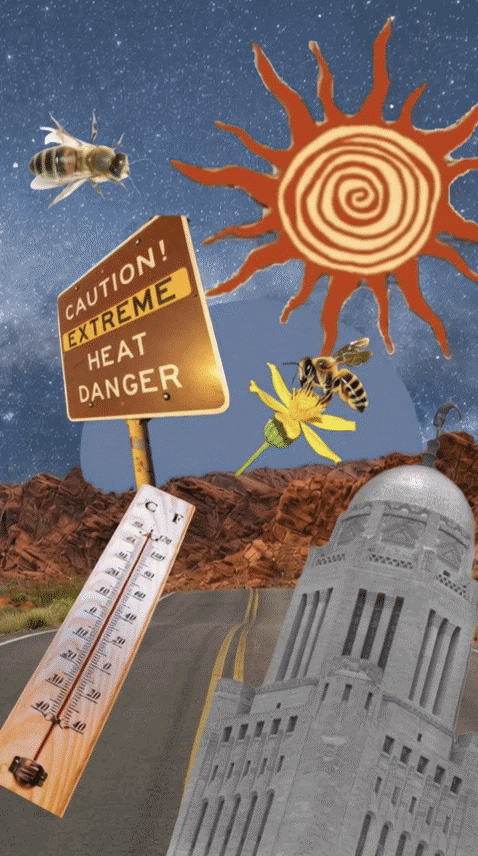
On July 25, 1936, Lincoln endured the hottest day ever recorded in the city’s history: a blistering 115°F by afternoon, followed by an overnight low of 91°F. With homes and apartments offering little relief, residents carried blankets to the Capitol lawn and slept outside, hoping for even the slightest breeze. It was a night when the city itself seemed to radiate heat back at anyone who stayed within its walls.
Nearly a century later, you can still feel an alternate version of that night on any July afternoon in Lincoln. Step off a shaded sidewalk onto open asphalt and the heat hits your shins before the sun hits your face. Step back under a mature oak and the air loosens its grip.
That line, where the shade ends, is the urban heat island in miniature. It's an old phenomenon with new urgency.
The Urban Recipe for Rising Temperatures
Cities tend to run warmer than the countryside around them, especially at night. Scientific documentation of this phenomenon dates to the early nineteenth century, when Luke Howard was a pioneer in urban climatology and one of the first to compare temperature records from London with surrounding locations. His findings, presented in The Climate of London, identified the city’s additional warmth and its nighttime character (Mills, 2008). The causes can traced back to our built-in environment.
Asphalt, concrete, and dark roofs absorb solar energy all day and release it slowly after sunset. Impervious surfaces shed rain rather than holding it, leaving little water to evaporate. Plants work the other way. Through evapotranspiration, they release water vapor into the air, carrying heat away from their surroundings, much as sweat cools skin. Remove the plants and you lose both shade and that natural cooling.
The Mechanics of Shade, Soil, and Evapotranspiration
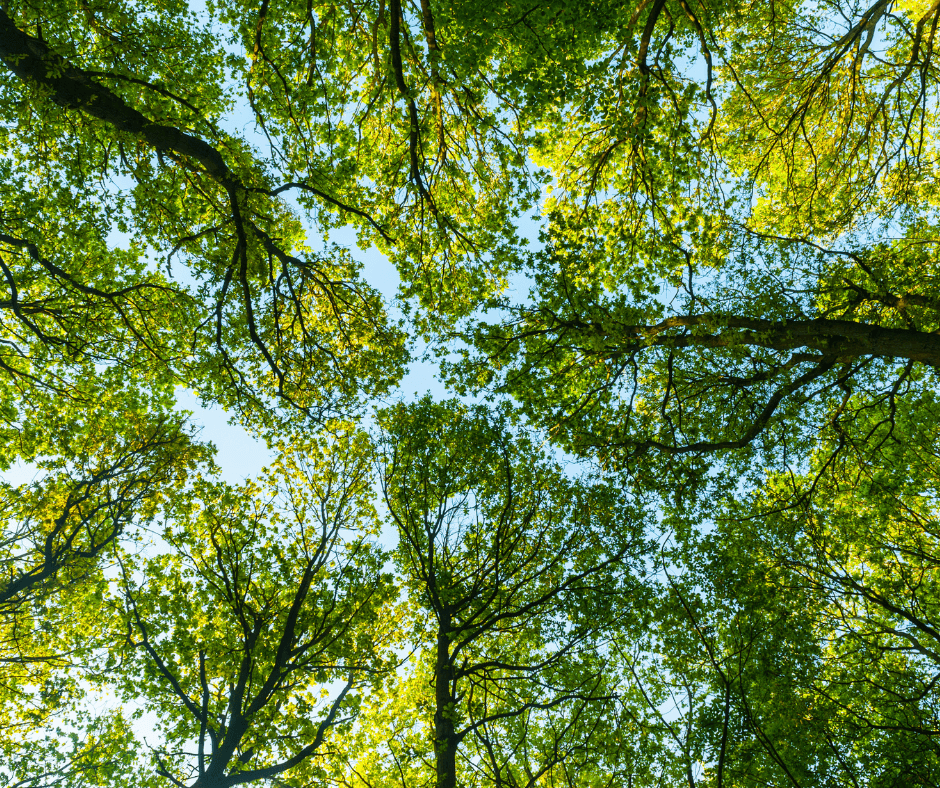
A tree is a parasol and a swamp-cooler at once. Its canopy catches sunlight before it reaches pavement, roofs, and people. A mature canopy is a long-term investment since it takes years to grow. Shrubs and perennials work closer to the ground. They shade soil, buffer hard edges, and provide habitat. Grass and groundcovers cover bare soil, hold it in place, and add some evaporative cooling. As simple as it sounds, used together, these layers help turn scattered plantings into connected green infrastructure.
But not all plants perform equally. Cooling depends on species, canopy structure, plant health, water, soil, climate, placement, and maintenance.
Designing Cooler Cities through Natural Processes
Nature-based solutions use and/or restore natural processes to address practical problems. In cities, that can mean street trees, pocket parks, greenways, rain gardens, bioswales, planted parking lot islands, and, where appropriate, green roofs.
None of these choices fit all scenarios. In fact, a mature street tree may deliver substantial shade over a sidewalk. A smaller rain garden may offer stormwater management, habitat, and modest local cooling instead. The best results come from asking where people experience heat vulnerability: at bus stops, school grounds, playgrounds, walking routes, and apartment entrances. That makes good planting less about "plant more trees" than about the right vegetation in the right places, designed as functional infrastructure.
Climate resilience: How Can Nebraska’s Cities Adapt to a Hotter Future?
A cooler Nebraska begins with what we grow and how we anticipate. Growth is an opportunity as well. Lincoln, Omaha, and smaller communities across Nebraska will keep building streets, parking lots, neighborhoods, campuses, and public spaces as population grows. Trees and other vegetation can be part of the infrastructure that helps communities adapt to heat, if they are considered early in the planning process and include long-term care to support them.
Plants are not the whole answer. The choice of materials and landscape designs also needs to be made carefully, considering local conditions and their effect on people at street level. Green infrastructures, however, offers something that few other strategies can: shade, moisture, habitat, beauty, and cooling in the very places where people live, work, walk, and gather. Trees can provide shade for sidewalks and buildings; shrubs, grasses and other plantings can create layers of vegetation at pedestrian level. Together, these elements can help make streets and public spaces more comfortable, while providing benefits beyond heat reduction.
Addressing the heat stress in our community requires a multi-collaborative approach. Landscape designers, planners, tree experts, engineers, municipalities, neighborhood groups, and residents can contribute as the right planting choices and the right design will also vary from place to place. This is where local expertise counts.
If your community is considering a new streetscape, neighborhood project, public landscape, tree planting effort, or other strategy to create healthier outdoor spaces, contact organizations such as PlantNebraska, which can help you understand what plants and approaches are appropriate for your site. PlantNebraska provides information on Nebraska trees, shrubs, perennials, grasses, street trees, and community forestry to help communities make informed plant selection decisions.
There isn’t a single solution to making Nebraska climate-resilient. A more climate-resilient environment is created by better decisions, made together, one street, landscape, and community at a time.
References
Mills, G. (2008). Luke Howard and The Climate of London. Weather, 63(6), 153–157. https://doi.org/10.1002/wea.195.tottenhamclouds.org
History Nebraska. (n.d.). It’s too hot to sleep inside! MacDonald Studio Collection. https://history.nebraska.gov/its-too-hot-to-sleep-inside/