They can spread quite aggressively. Some varieties can get a bit too enthusiastic. They aren't always the neatest plants in the garden. And by the time many people start thinking about putting their gardens to bed for the year, asters are just getting started.
But maybe that's exactly why we need more of them!
Asters are some of the most valuable plants we can put into our landscapes, especially here in Nebraska. They are tough, colorful, incredibly diverse, and provide critical food for pollinators when fewer flowers are available.
So instead of thinking, "How do I get rid of these asters?" maybe we should be asking, "Where can I plant more?"
Tough Enough for Nebraska
If there is one thing asters know how to do, it's survive. Nebraska gardens can be brutal. We get freezing winters, scorching summers, droughts, heavy rain, and strong winds. Asters, however, are built to handle it. Most asters are native across a huge portion of North America, and native species are especially well adapted to the conditions they evolved in. Once established, many tolerate drought and intense heat while continuing to put on a show. That toughness makes them excellent choices for landscapes where you don't want to constantly baby your plants. Give them the right conditions, get them established, and they can take care of themselves from there.
There's An Aster for That
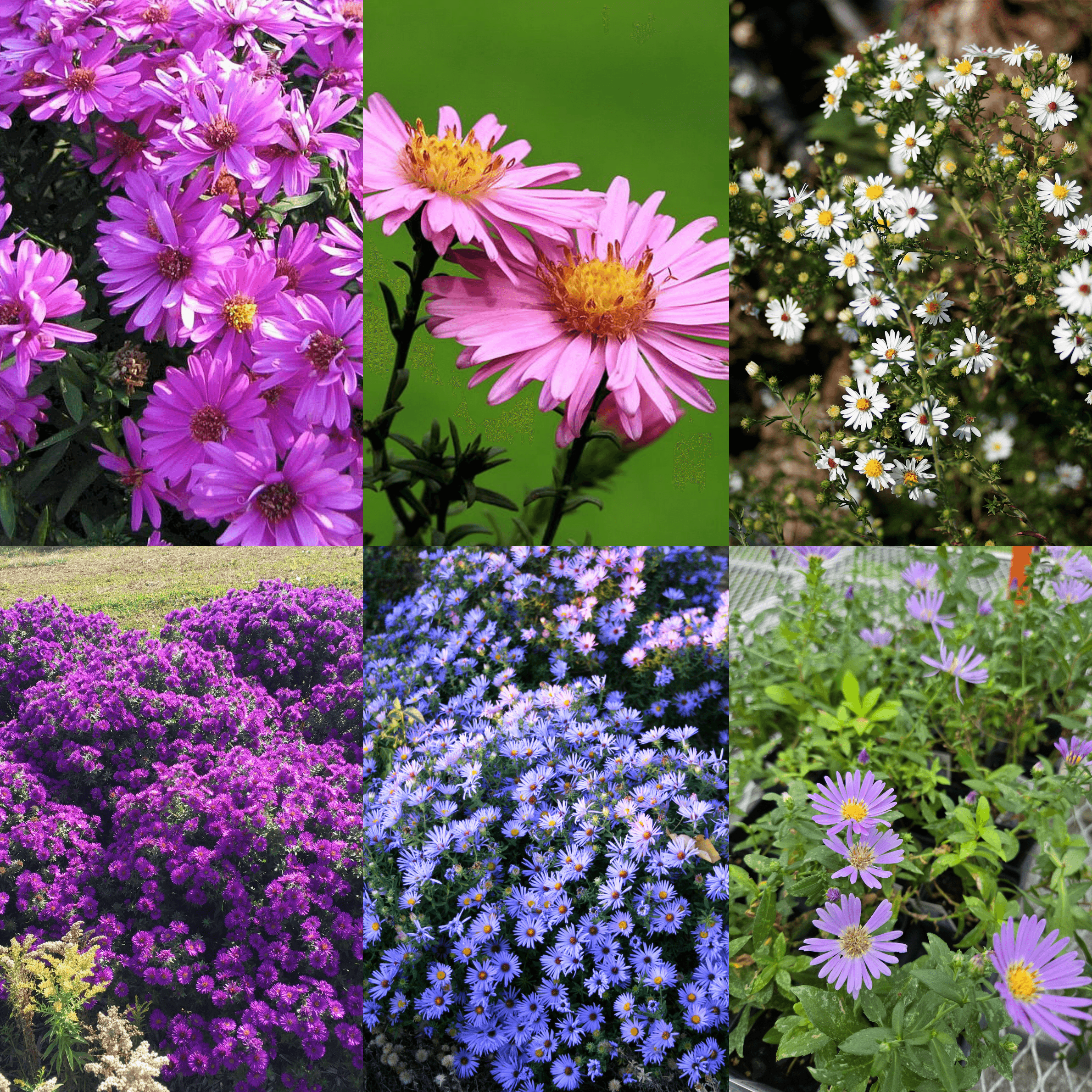
When someone says "aster," you might picture a tall, open plant covered in small purple flowers. But the world of asters is much bigger than that. There are asters with flowers ranging from white and pale pink to lavender, blue, purple, and even some red-toned varieties. Some have large, showy flowers, while others produce clouds of smaller blooms.
And the size range is just as impressive. There are asters that stay low and act like groundcovers, like Snow Flurry aster (Sym. ericoides). There are asters that stay short and work beautifully toward the front of the garden, while others can grow several feet tall and make excellent back-of-the-border plants. This means there is probably an aster for every garden situation.
Need something short? Try the woods aster series (Sym. dumosum).
Need something tall? Try the New England aster (Sym. novae-angliae).
Need something to fill a shady area? Try the Lady in Black aster (Sym. lateriflorum).
Want a plant that can play almost any role? You guessed it, there's an aster for that!
"They're Just Too Aggressive!"
I've heard people say this as they walk past them in the greenhouse, so let's address the elephant in the room: some asters will spread, and spread a lot. This can be either a feature or a problem, depending on your landscape goals. If you are trying to maintain a perfectly controlled garden where every plant stays exactly where you put it, an overly enthusiastic aster might drive you crazy. Some species spread through rhizomes or reseed readily, and given the right conditions, they will establish themselves throughout an area.
But consider another perspective. Instead of constantly buying, planting, watering, and replacing plants to cover every square foot, an aster that naturally spreads can fill that space over time. In the right location, that aggressiveness can mean less maintenance and more flowers.
Aggressive doesn't automatically mean it's bad. Sometimes it just means a plant is really good at being a plant.
The Late Season Lifeline
Here is where asters really earn their place in the landscape: fall. By early fall, the garden can start to look tired. Many of the plants that carried the landscape through spring and summer have finished blooming. The days are getting shorter, temperatures are dropping, and the number of flowers available to pollinators is starting to decline. Then asters show up as your garden's late-season lifeline. Suddenly, there are flowers everywhere. Their blooms provide important late-season food for active pollinators. And it's not just about insects. Those late-season flowers also give us something to enjoy.
When much of the landscape is starting to turn brown and fade, asters can cover themselves in flowers and keep the garden shining well into the fall. Their purples, pinks, whites, and blues pair wonderfully with goldenrods, grasses, and other late-season bloomers. Think of their flowers as the confetti we receive for finishing the growing season strong.
Let's Give Asters a Chance
Are asters perfect? No. Some spread more than you'd like. Some get tall and floppy. Some can look a little wild if they're planted in the wrong place. But those aren't reasons to dismiss them. They're tough, colorful, diverse plants that support pollinators and provide beauty when much of the garden is winding down.
So, the next time you see an aster in the PlantNebraska greenhouse or your local garden center, don't walk right past it. Think about that spot in your landscape where other plants struggle. When September rolls around and the rest of the garden starts to fade, you'll be glad you gave an aster a chance.
As we move into the garden planning season for next year, remember that asters deserve a place in Nebraska landscapes. They bring color, support wildlife, and thrive in tough conditions.
Let's plant Nebraska, and let's plant more asters while we're at it.
::
Images clockwise from top left: alert aster (Sym. novi-belgii ‘Alert’), woods pink aster (Sym. dumosum ‘Woods Pink’), snow flurry heath aster (Sym. ericoides ‘Snow Flurry’), woods blue aster (Sym. dumosum ‘Woods Pink’), October skies aster (Sym. oblongifolius ‘October Skies’), and New England aster (Sym. novae-angliae)