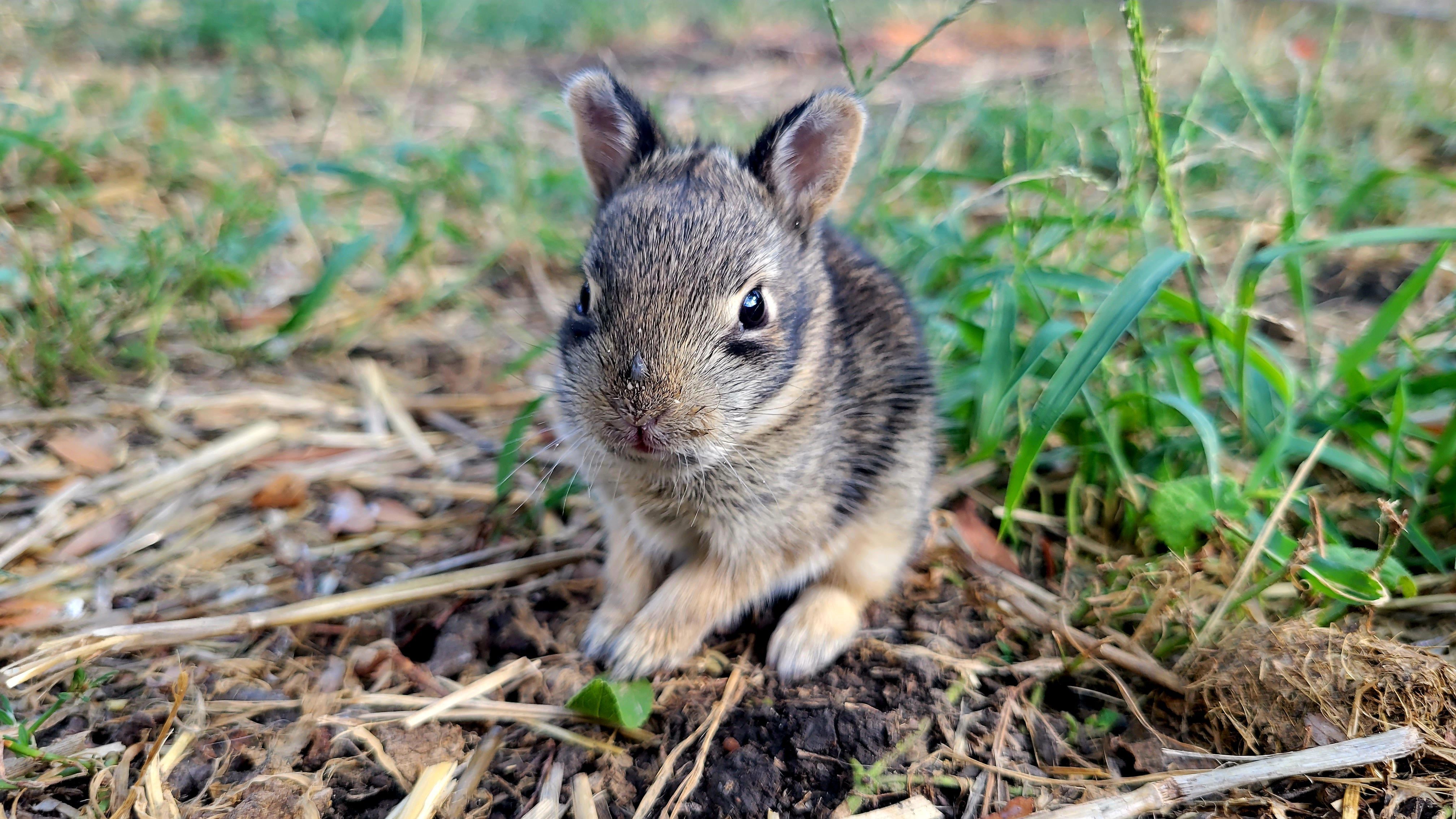
Rabbits can take a toll on our landscapes and vegetable gardens. One day your plants look perfectly healthy, and the next, leaves are gone, stems are clipped off or bark has been chewed away. Some hardy plants, like mature established Hosta, can usually bounce back from a little early season nibbling, but repeated feeding can eventually kill plants, especially young trees and shrubs.
The best approach is prevention. Once rabbits strip bark from a tree or heavily damage shrubs, there’s often very little you can do to save them.
Is It Really Rabbits?
Before you start trying to solve the problem, though, it helps to make sure rabbits are actually the problem. Different pests can cause similar damage, but leave different clues behind. Rabbits leave clean, angled cuts on stems that look almost like they were clipped with scissors. They also eat entire leaves instead of leaving holes behind. Damage is usually close to the ground—typically under three feet high—and you may spot small droppings nearby.
Other garden pests leave different signs. Slugs create irregular holes in leaves and leave behind shiny slime trails. Voles make narrow trails through grass and feed underground on roots and bulbs. Deer, on the other hand, tear foliage instead of clipping it cleanly. Leaves and branches appear ragged and ripped, and the damage is much higher off the ground.
Eliminate Habitat
Once you know rabbits are the issue, the first step is making your yard less inviting. Rabbits love places where they can hide. Keeping grass and weeds trimmed around trees, shrubs and garden beds can help reduce cover.
Brush piles, stacks of lumber, woodpiles and overgrown vegetation all make great hiding spots, so cleaning those up can go a long way. If rabbits are getting under decks or sheds, attaching small wire mesh around the base can keep them out.
Add Fencing
Although they aren’t beautiful, a fence is the most reliable solution.
For woody plants, make a cylinder of 1-inch mesh hardware cloth around each plant or group of plants. Bury the wire 4-inches in the soil to prevent them from digging underneath.
For gardens, a 2-foot-high fence around the garden edge will protect against cottontails and a 3-foot-high fence against jackrabbits. A 2-foot-high fence made of poultry netting and 4-foot, 3/8-inch fiberglass fence rods spaced 3 feet apart can protect a garden space for minimal cost.
To exclude rabbits from an entire backyard, attach 1-inch x 2-inch or 1-inch hardware cloth to the base of an existing wood fence. 2 x 3-inch mesh or chain link fence will exclude adults, provided the fencing is anchored properly, but not young rabbits.
Floating row covers can provide some protection in the vegetable garden.
Hit or Miss?
If you’ve spent any time online looking for rabbit solutions, you’ve probably seen dozens of home remedies and “guaranteed” fixes. Some may help temporarily, but most don't work at all.
Repellents sold in garden centers can sometimes reduce feeding, but they need to be reapplied often, especially after rain. They rarely stop damage completely.
- Taste repellents – hot pepper spray, rotten egg, ect. Must be sprayed on the foliage to provide protection. Do not use on edible plants.
- Scent repellents – garlic, blood, predator urine. Apply to soil around the vegetable garden, or on the foliage of non-edibles.
Scare tactics — things like scarecrows, fake owls, pie pans, or rubber snakes — might startle rabbits for a few days, but they usually figure out pretty quickly that nothing is actually threatening them.
The same goes for popular DIY tricks like hanging bars of soap in the garden. There’s very little evidence they do much at all.
It’s also important to know local laws before trying stronger control methods:
- In Nebraska, there are no poison baits registered for use in rabbit control.
- Shooting rabbits is illegal in most city limits, including with air rifles.
- Many communities restrict trapping as well, and movement of trapped rabbits further than 100 yards from where they were captured is illegal in Nebraska.
At the end of the day, the most effective rabbit control comes down to making your yard less attractive and protecting vulnerable plants with fences before damage happens.