My morning walks to work this time of year are always a treat—not only because of the beautiful spring weather, but because the scent of lilacs, roses and peonies fills the air. However, another fragrant species is tucked along public trails, home gardens and rights-of-way that is known to disrupt Nebraska ecosystems: Amur honeysuckle (Lonicera maackii).
How to Identify Amur Honeysuckle
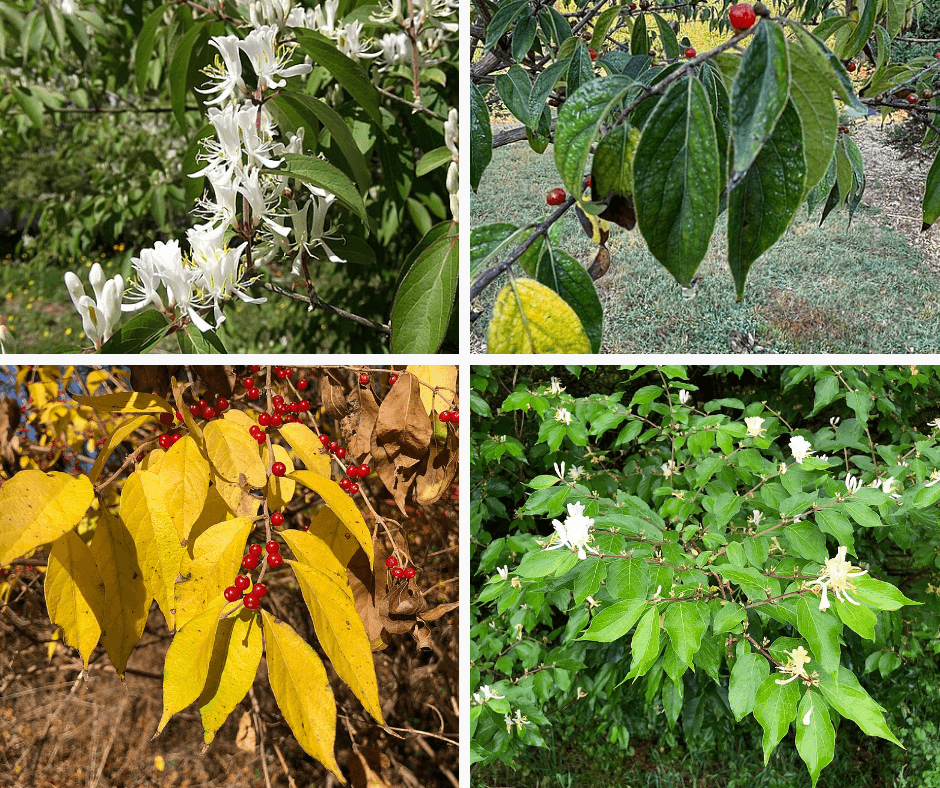
This species is easy to spot throughout eastern Nebraska in the spring. It greens up earlier than most plants, its white blossoms with yellow stamens stand out against the landscape and it has distinctive shaggy bark.
It should not be confused with the beautiful trumpet honeysuckle (Lonicera sempervirens), a non-invasive climbing vine with bright red flowers. While trumpet honeysuckle is not invasive, some home gardeners regret planting it if they are not prepared for the amount of space it can take up, so it is always worth doing your research before planting.
How Did It Spread?
Amur honeysuckle was introduced to the United States as an ornamental shrub in 1897 and was later used extensively in erosion control programs during the 1960s. Since then, it has spread rapidly with help from birds that eat and disperse its berries. Today, it can be found in urban areas and forests across much of the northern United States. Some states have even designated it as a noxious weed, though Nebraska has not. Its rapid growth rate and ability to outcompete native plants for sunlight make it especially harmful along forest edges and in woodland ecosystems. Because it leafs out earlier than many native species, it can quickly dominate an area and reduce biodiversity.
Managing Amur Honeysuckle in the Home Landscape
Here’s the good news: in a home garden setting, Amur honeysuckle is relatively easy to control. Here is my advice:
First and foremost, do not plant it.
If it appears in your landscape, pull it early when possible. The roots typically stay within the top few inches of soil, making even larger shrubs manageable to dig out.
If digging is not an option, you can cut the shrub at ground level and apply herbicide directly to the cut stem using a brush or dauber. Be sure to select an herbicide labeled for woody species and remember—the label is the law.
For larger infestations on bigger properties, foliar herbicide applications may be more effective, though they can also impact surrounding plants. In these situations, we recommend working with your local extension office or weed control professional to create a safe and effective management plan.
Protecting Nebraska’s Native Landscapes
Unlike many invasive species, Amur honeysuckle is highly manageable, especially when identified early. Keep your eyes peeled for new sprouts and address them quickly. Then sit back and enjoy the many wonderful spring blooms that truly belong in Nebraska landscapes.