
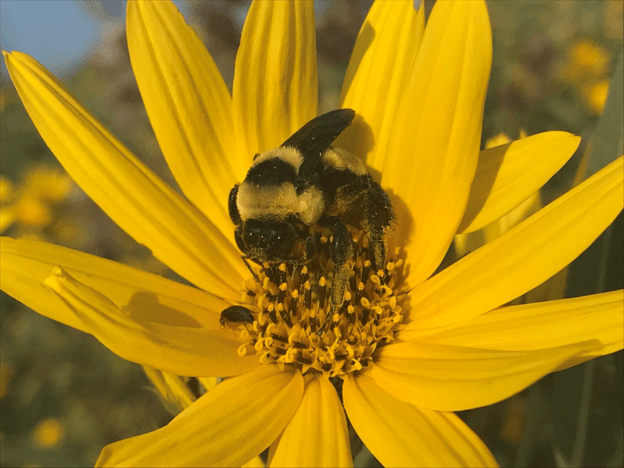
Nebraska is home to 20 native bumblebee species that inhabit the state’s diverse landscapes, from backyard gardens to prairies to farm fields. These fuzzy, large-bodied bees are a group of ecologically and economically important pollinators, as they pollinate both native plants and fruit and vegetable crops from early spring to late fall.
Unfortunately, many bumble bee species are declining—nearly one quarter of North America’s 50 species are at-risk. Nebraska is home to three threatened species, Western, Suckley cuckoo and Variable cuckoo bumble bees, that have not been seen in the state since 1999-2001. Other at-risk species, like American and Southern plains bumble bees, can still be found in Nebraska but have declined in other regions. Many factors are thought to play a role in bumble bee declines, including climate change, habitat loss, pesticide use and disease pressures. Conserving Nebraska’s bumble bees requires taking action now, before it’s too late for species in decline.
Here are three ways you can help Nebraska's bumble bees:
Channel Your Inner Scientist
Protecting bumble bees requires a better understanding of their habitat needs and current distributions, so we can target conservation efforts in places where at-risk species are still present. You can help by joining the Bumble Bee Atlas, a community science project focused on tracking and conserving native bumble bees. Atlas volunteers spread out across the state to conduct catch-and-release surveys of bumble bees, documenting species locations, floral use, and habitat associations along the way. Anyone is welcome to join the Atlas—no prior experience is needed! We will provide you with the training you need to get comfortable with field work and data collection. Visit www.BumbleBeeAtlas.org to learn more about the program, register for upcoming events, or sign up for the Atlas newsletter.
Create Bumble Bee Habitat
Bumble bees need places to nest, overwinter and find food. Planting bumble bee favorites like bee balm, milkweed, purple coneflower, native thistles and goldenrod is a great way to provide foraging habitat for native pollinators. As bumble bees are active throughout the growing season, it’s important to choose a mix of plants that will bloom from early spring to late fall. See the Xerces Northern Plains Plant Guide and Nesting and Overwintering Habitat Fact Sheet for recommendations on creating foraging, nesting and overwintering habitat for bumble bees and other pollinating insects.
Spread the Word
Bumble bee conservation depends on public support—you can help others get excited and interested in bumble bees and other pollinators by placing a yard sign in front of your native pollinator garden, sharing on social media, or talking to your friends and loved ones about the importance of bees.
If you would like to learn more about Xerces’ efforts to conserve bumble bees in Nebraska, please reach out to us at nebumblebeeatlas@xerces.org.