

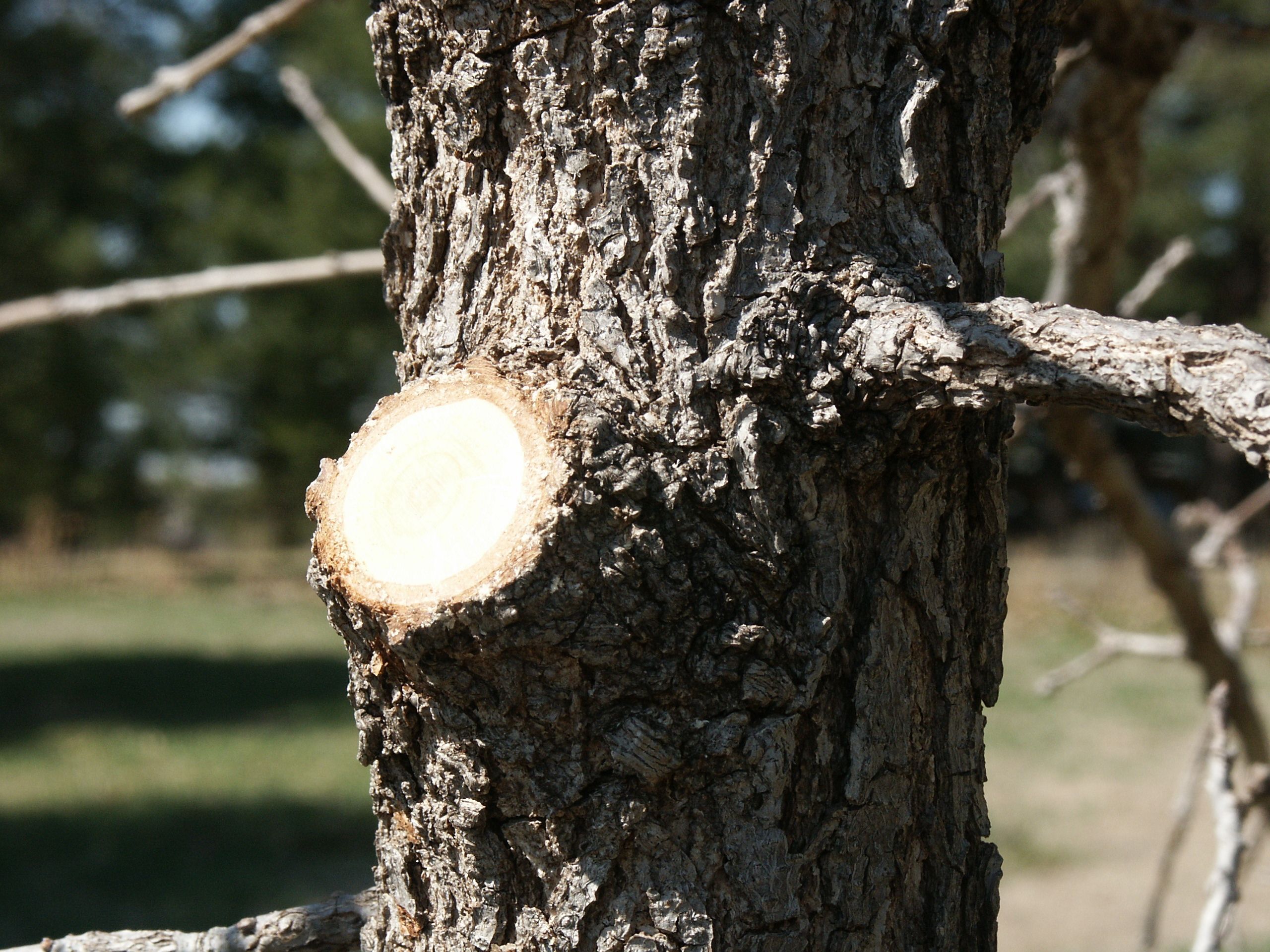
Thinking about pruning your trees soon? Before you get started, give some thought to which tools to use and how to use them correctly.
The best pruning tool depends on the size of the branch being removed and its location within the plant. Pruning tools familiar to most DIY homeowners include hand pruners, loppers, pruning saws, hedge shears and chain saws.
Hand pruners
Hand pruners, also called pruning shears, are used to cut branches up to ¾ inch in diameter. There are two main types:
- Scissor-type (bypass) pruners have curved blades that overlap as they cut.
- Anvil-type pruners have a sharp upper blade that cuts against a flat surface.
Scissor-type pruners are generally preferred because they make clean, precise cuts when sharp and properly used. Anvil-type pruners do not cut as close and are more likely to crush stems.
Using hand pruners on branches larger than ¾ inch often results in torn or jagged cuts and may damage the tool.
Pole pruners allow you to reach higher branches and can cut limbs up to 2 inches in diameter. They consist of a stationary hook and a hinged blade operated by a rope and mounted on a long wooden or fiberglass pole.
Loppers
Loppers, or lopping shears, have long handles that provide extra leverage for cutting larger branches. They are available in both bypass and anvil styles and are especially useful for hard-to-reach areas. Loppers are effective for cutting branches ¾ to 1½ inches in diameter.
Many loppers include helpful features such as:
- Telescoping handles for extended reach
- Ratcheting mechanisms that allow cuts to be made in stages
- Geared or compound mechanisms that increase cutting power
Ratcheting loppers hold pressure on the branch between squeezes until the cut is complete. Geared and compound loppers amplify the force applied by the user and typically cut through branches in a single motion.
Pruning saws
Pruning saws are used for branches larger than 1¾ inches in diameter. They are available as hand saws or pole saws.
Pole saws consist of a saw blade attached to a long pole and are useful for trimming small, hard-to-reach branches from the ground. Both pole saws and pole pruners can cut branches up to 2 inches in diameter. When removing branches with a saw, always use the three-cut method to prevent bark tearing and damage to the tree.
Hedge shears
Hedge shears, either manual or electric, are used to shape formal hedges to a specific size and form. They are not appropriate for pruning trees or shrubs.
Chain saws
Chain saws are commonly used by professional arborists for large branches. However, they are dangerous for inexperienced users. Home gardeners should use pruning saws instead to reduce the risk of injury.
In potentially hazardous situations—such as pruning large branches high in a tree or near power lines—always contact a trained arborist.
Choosing Quality Tools
When purchasing pruning equipment, invest in high-quality tools. While they may cost more initially, well-made tools perform better, are safer to use, and will last much longer when properly maintained than cheaper alternatives.
For more information on pruning techniques and timing, check out the resources below.