
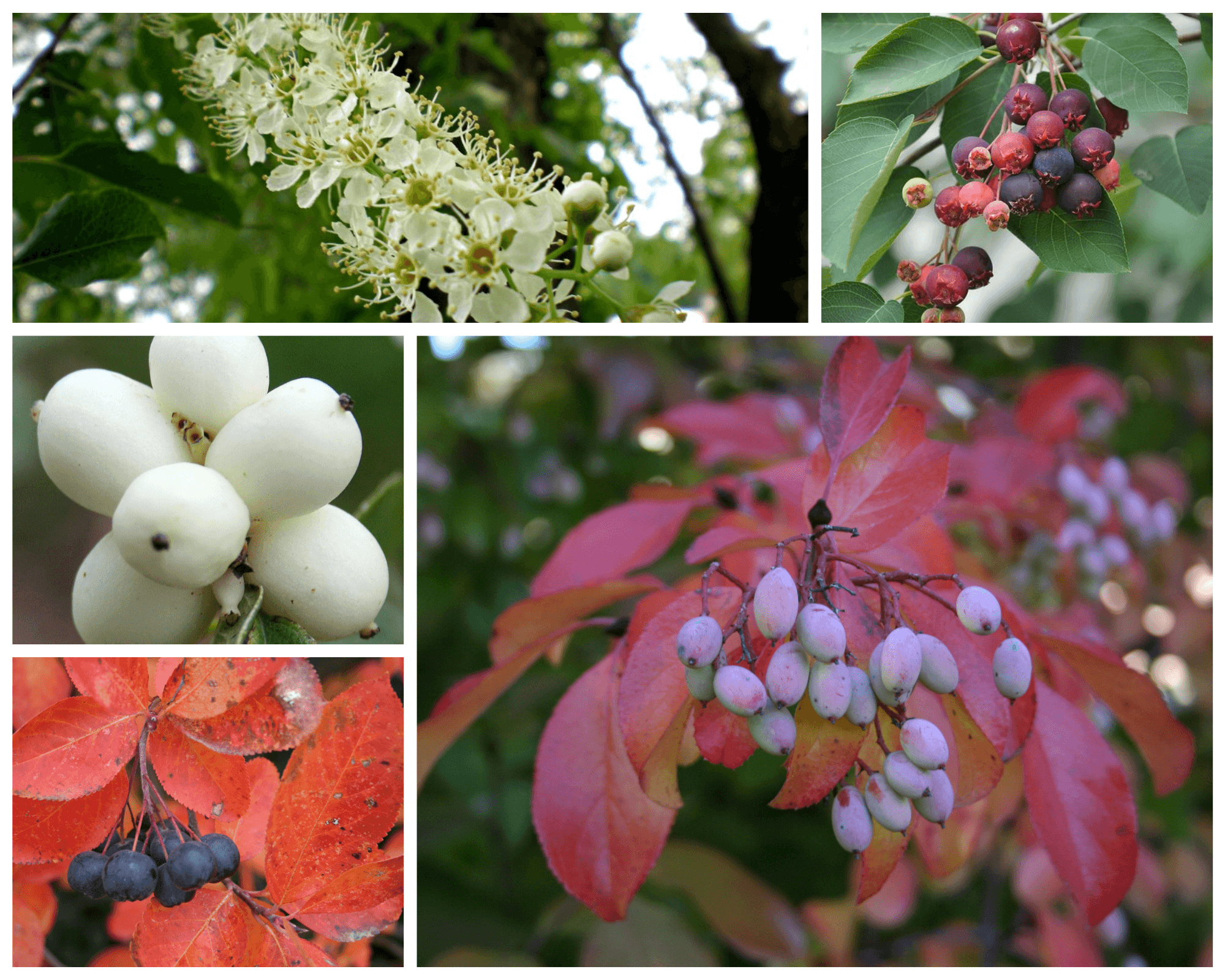
Image clockwise from top left: white flowers of the black cherry tree; red-purple berries of downy serviceberry; pink-purple berries of Blackhaw viburnum; dark blue berries of the black chokeberry and white berries from the snowberry shrub.
If one of your landscape goals is to support wildlife, it might help to think like a host planning a great meal with a lot of options. The best wildlife-friendly yards offer food, shelter and seasonal variety—and regionally native trees and shrubs do that better than anything else.
Native woody plants provide a year-round buffet: dried seeds and berries that persist through winter, summer foliage and fruits for nesting and rearing young, and early spring nectar that helps pollinators get a much-needed start. Just as important, trees and shrubs offer the most diverse shelter—places to nest, hide and overwinter.
With more than 50 species of native trees and shrubs to choose from in Nebraska, the options can feel overwhelming. Here are five standout natives that deliver exceptional habitat value for wildlife, as well as plenty of beauty for us, too.
Black Cherry (Prunus serotina)
A fast-growing native tree, black cherry announces spring with fragrant white blooms and follows up with small cherries that ripen from red to black by late summer. The fruits support at least 47 species of wildlife and are a particular favorite of birds, including eastern bluebirds, northern flickers and red-breasted grosbeaks.
Black cherry also pulls double duty as an early-season pollinator plant and a larval host for eastern tiger swallowtail and viceroy butterflies. It thrives in full sun to part shade and typically reaches 30–40 feet tall in eastern Nebraska.
Downy Serviceberry (Amelanchier arborea)
If you want a plant that shines in every season, downy serviceberry is hard to beat. Snow-white spring flowers give way to sweet, dark purple fruits that taste a bit like blueberries. More than 35 bird species enjoy serviceberries, including cedar waxwings, robins, cardinals, orioles and woodpeckers. In fall, its bluish-green leaves turn glowing shades of orange and red. Serviceberry prefers full sun to part shade and matures at 15–25 feet tall, making it a great choice for smaller yards.
Black Chokeberry (Aronia melanocarpa)
This compact, multi-stemmed shrub (just 3–6 feet tall) is a powerhouse for wildlife. In May, clusters of white flowers support a variety of pollinators. By late summer and fall, the shrub is loaded with dark blue berries that birds and small mammals rely on.
Black chokeberry thrives in part shade, tolerates flooding and prefers moist, slightly acidic soils. Its glossy green foliage turns a brilliant red in autumn, making it as showy as it is useful. Birds, especially northern cardinals, tend to favor black chokeberries over the red variety. One characteristic to be aware of is the fact that black chokeberry tends to sucker, so prune regularly to prevent colonial spread unless you have the space for a more naturalized look.
Blackhaw Viburnum (Viburnum prunifolium)
Blackhaw viburnum offers three seasons of interest and critical food when it’s most needed. Large white spring blooms give way to purplish, berry-like drupes that often persist well into winter—an invaluable resource for cold-season foraging. This medium-to-tall shrub (12–20 feet) grows well in dry to medium, well-drained soils and adapts to sun or shade, though it prefers part shade. Cardinals, robins, bluebirds, cedar waxwings, wood thrushes and flickers are all regular visitors. In fall, its foliage turns a striking red.
Snowberry (Symphoricarpos albus)
Snowberry is a tough, thicket-forming shrub that thrives just about anywhere in full sun to shade and in a wide range of soils. Its signature white berries ripen in early fall and persist late into the season, providing food for species like ring-necked pheasant, robins and cedar waxwings. Growing 4–6 feet tall, snowberry responds well to hard pruning in spring and works beautifully along edges, slopes or naturalized areas where it can spread and create shelter.
Plant Once, Feed Many
When you plant native trees and shrubs, you’re doing more than beautifying your yard—you’re restoring habitat, supporting pollinators and helping wildlife thrive in every season. A landscape filled with natives becomes a living pantry, offering nourishment and refuge year-round.
In short: plant once, and let nature do the rest.